Few designers reshaped the silhouette of late-twentieth-century fashion as boldly as Jean Paul Gaultier. The Paris-born designer — long cast as fashion's enfant terrible — treated eyewear not as an afterthought but as architecture for the face. Nowhere is that clearer than in the 56-series: the sunglasses line that turned mechanical detailing, jeweled bridges, and sculpted metalwork into objects collectors now chase across continents. These are not accessories. They are small machines, built to be worn.
Paris vision, Japanese precision.
Gaultier was born near Paris in 1952 and spent his career dismantling the rules of couture, but the eyewear that carries his name owes as much to where it was made as to who designed it. The collections were manufactured in Japan, in an era when that meant a standard of craftsmanship and material quality the mass market could not touch. Titanium and heavy gold-plating were practically house signatures.
The line reached Europe around 1990 and was organized into recognizable families: the 55-series optical frames, the 56-series sunglasses, and the later Junior Gaultier 57 and 58 lines. Because production wound down decades ago and was never large to begin with, every surviving pair is a finite artifact. No factory is making more.
"Steampunk" before it had a name.
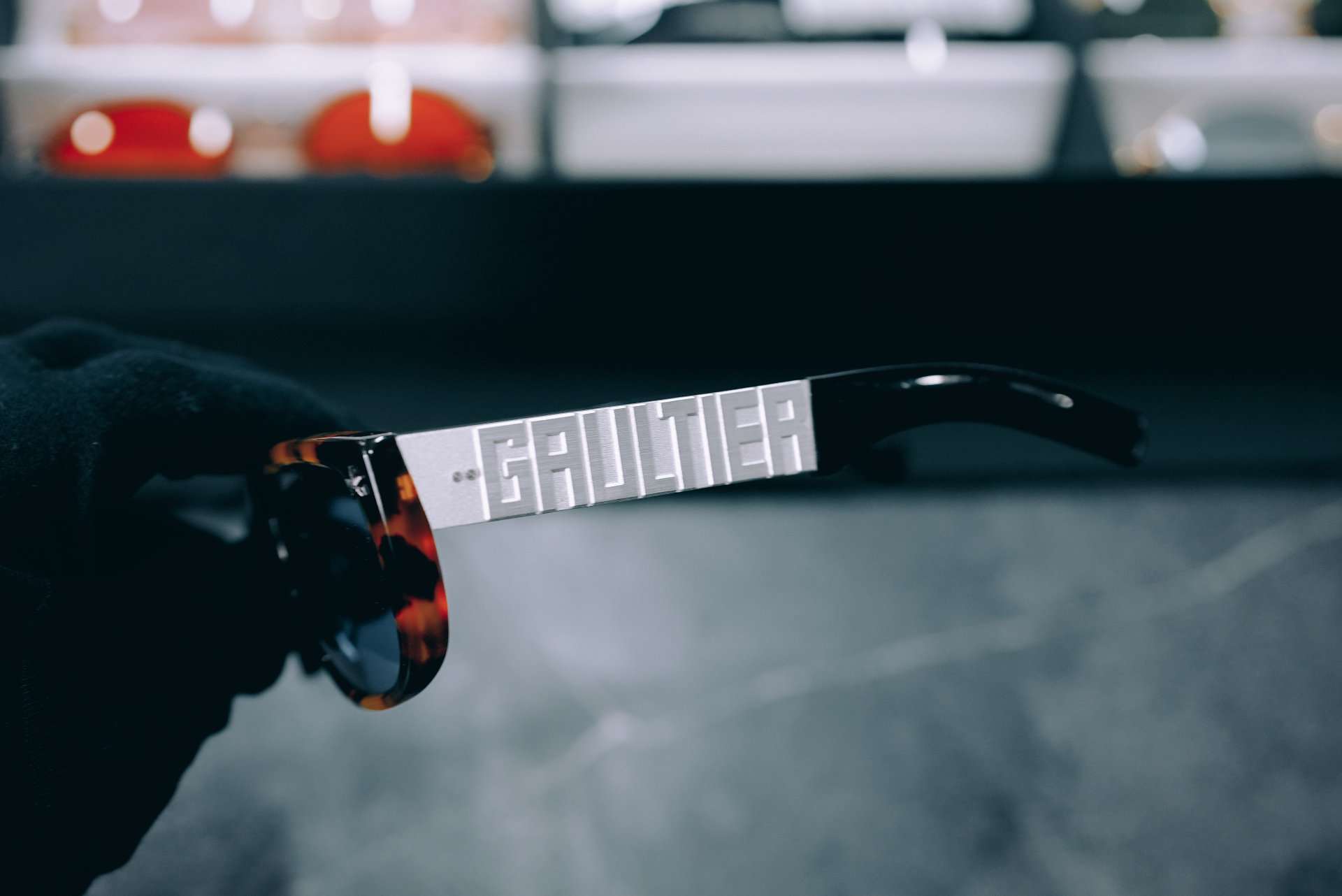
The 56-series is best known for what collectors call its steampunk or retrofuturist character: exposed coil springs, screw detailing, fork temples, filigree, and bridges set like fine jewelry. Gaultier lifted the ornament and theater of his haute-couture work and engineered it into metal — Victorian machinery imagined for a future that never quite arrived. Up close, the hardware is functional, not decorative; the articulation is real. That is the tell of the originals, and the reason they have aged into design objects rather than dated trends.
From the runway to the culture.
Gaultier's frames moved off the couture runway and into music, film, and street style, and the 56-series in particular found a second life in collector and hip-hop culture decades after release. Worn as a signal of taste and rarity rather than logo-flexing, these pieces became shorthand for knowing exactly what you are looking at. That cultural pull is a large part of why demand keeps climbing while the supply only shrinks — a one-way market that rewards anyone who secured an original early.
How to tell an original from a reissue.
This is the part that protects you as a buyer. Vintage Gaultier is widely reproduced and faked, so a handful of tells separate a genuine survivor from a modern imitation:
- Model numbering: genuine vintage pieces carry a series-and-model format stamped on the frame — for example 56-3272 or 56-6104 — matching period references.
- Origin marks: era-correct construction and "Made in Japan" markings consistent with the original manufacturing.
- Weight & finish: originals have a density and plating quality that reissues and counterfeits rarely match; lightweight, thinly-plated frames are a red flag.
- Working hardware: real coil springs, screws, and articulated detailing — not molded imitations.
- Deadstock vs. pre-owned: unworn deadstock (NOS) survivors are the rarest grade; honestly-disclosed pre-owned pieces wear their age as character.
Every piece in the 858Vintage collection is authenticated against period catalogs and hallmark marks, sold as authentic vintage, and labeled honestly — deadstock where it is deadstock, pre-owned where it has been worn. Reissues, where they exist, are identified as reissues.
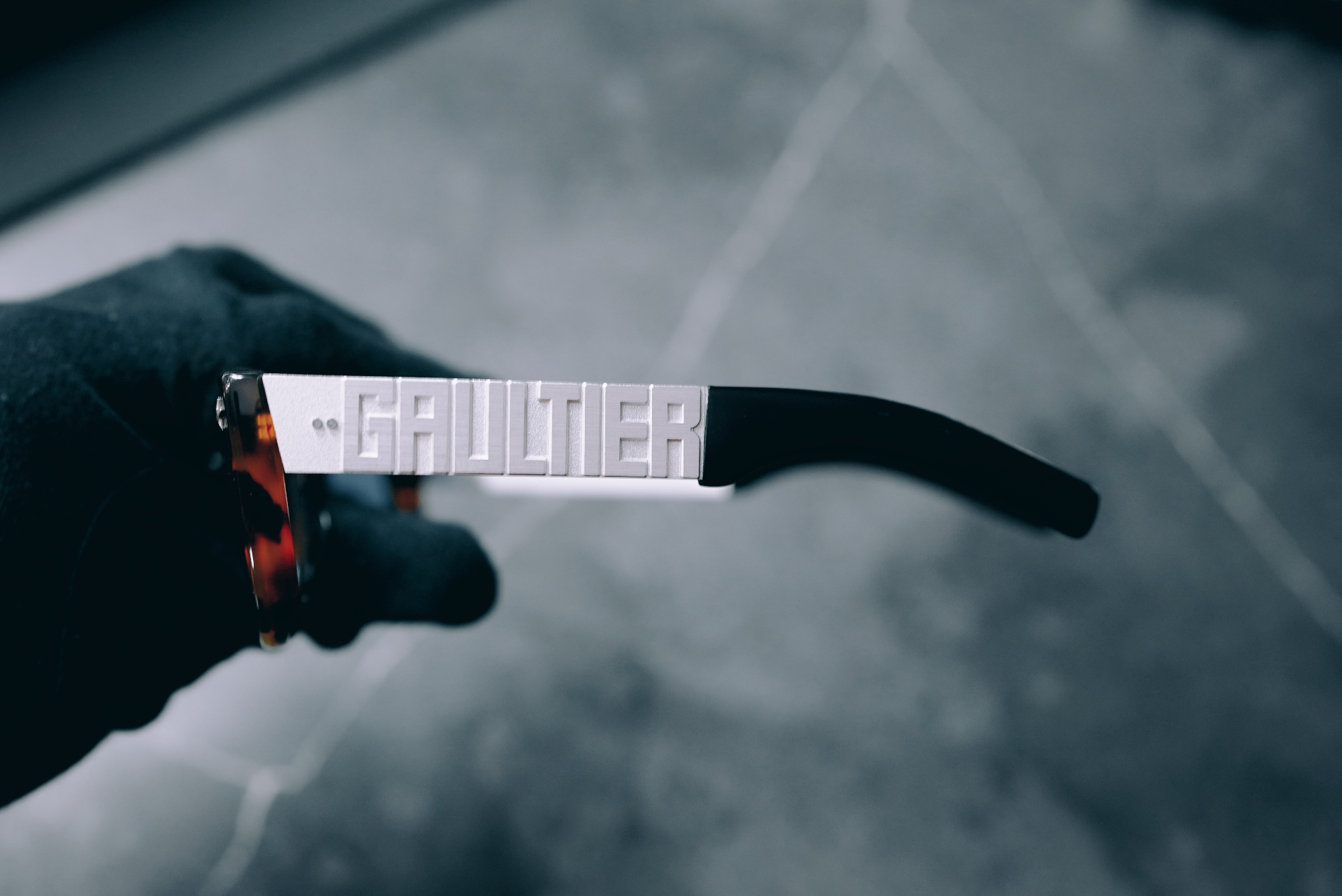
Gaultier in the 858Vintage collection.
We hold a focused selection of 56-series and related Gaultier pieces. Each is a one-of-one within the collection — when a piece sells, the slot closes for good.
What collectors ask first.
- How do I know a vintage Gaultier 56-series frame is authentic?
- Check the stamped series-and-model number, era-correct “Made in Japan” markings, the weight and plating quality, and whether the hardware genuinely articulates. We authenticate every piece against period references before it is listed.
- What's the difference between deadstock and pre-owned?
- Deadstock (NOS) means unworn original stock — the rarest grade. Pre-owned means the frame has been worn and may show age-related character. We label each piece accordingly and never blur the two.
- Why are these so collectible?
- Production ended decades ago, quantities were always limited, and the designs have only grown in cultural relevance. Finite supply against rising demand is the entire story.
- Can the lenses be fitted with a prescription?
- Many vintage frames can be reglazed with sun or prescription lenses by a qualified optician, though it depends on the individual frame. Consult an eyewear professional before any modification.